Facebook
 Telegram
 Instagram
 posternak.oleg@gmail.com
  Facebook
 Telegram
 Instagram
 posternak.oleg@gmail.com
 “Military Democracy” and Budanov as Its Proponent
Budanov’s appointment makes further rotations within Ukraine’s military and political leadership highly likely and, in some cases, effectively inevitable. Personnel changes across the security vertical are to be expected. President Zelenskyy needs a new, effective configuration of the security bloc as one of the key pillars of state order.
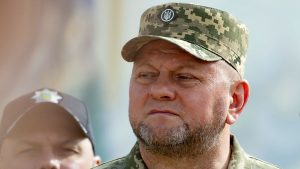
Among the topics circulating in political circles since this afternoon is the possibility of replacing the Commander-in-Chief of the Armed Forces of Ukraine. I believe General Syrskyi sensed this earlier — following Yermak’s dismissal — which explains his noticeably increased media activity over the past month.
That said, this decision has not yet fully matured or crystallized. The President is known for taking personnel decisions slowly and deliberately, carefully weighing risks and balances of influence.
Some changes, however, have already begun. Today, the dismissal of the Head of the State Border Guard Service, Lieutenant General Deyneko, was announced — a figure widely regarded as a loyal protégé of Yermak.
As for the appointment of Oleh Ivashchenko as Head of the Main Intelligence Directorate (HUR), far too much speculative “ornamentation” has been added to this story. I am referring to the narrative portraying this as a major success for Yermak. According to several donor-funded media outlets from the so-called “white list” (God forgive me), Ivashchenko, while heading the Foreign Intelligence Service (SZR), allegedly ensured Yermak’s personal security after his dismissal. This created a misleading impression that Ivashchenko was Yermak’s direct and dependent appointee.
It is worth recalling that the same “authoritative” outlet recently and confidently announced the appointment of Vlasiuk as Head of the Presidential Office. Many took the bait. In reality, Vlasiuk was not on the shortlist. This, of course, does not imply that he is unqualified or undeserving of such a position.
At this juncture, the President requires strong security officials with a clearly defined set of state-building competencies. This is precisely why Budanov remains in his position — and rightly so.
Returning to Oleh Ivashchenko. He is a Ukrainian general with a long career in the intelligence services and served as Budanov’s First Deputy at HUR until 2024. For him, this institution is effectively an alma mater. His core task now is to preserve the continuity of HUR’s operational effectiveness while shielding the agency from multidirectional political pressure.
Special attention should also be paid to who will be appointed as the new Head of the Foreign Intelligence Service. In recent months, this institution has significantly increased its public and political weight — largely due to Ivashchenko’s personal contribution.
This brings us to the key conclusion. Ukraine’s security institutions are gradually becoming independent actors in the country’s broader political landscape. It is they who will define the contours of Ukraine’s state resilience, relying on real authority and public trust.
In a certain sense, this represents a modern remake of the military democracy of the Cossack Hetmanate — with all its objective advantages and inherent risks.