Facebook
 Telegram
 Instagram
 posternak.oleg@gmail.com
  Facebook
 Telegram
 Instagram
 posternak.oleg@gmail.com
 Peru. Fujimori’s Right Renaissance
What have you heard about the latest presidential elections in Peru? For many specialists, impressions of Latin American elections were shaped by watching the cult film “Our Brand Is Crisis” featuring the remarkable Sandra Bullock. The film is unparalleled.
The pre-election campaign in Peru unfolded roughly along the lines of that real-life film scenario. Last month the country elected Keiko Fujimori as president by a narrow margin of 50,000 votes. She won the runoff with 50.13% against left-wing candidate and leader of the Juntos por el Perú party Roberto Sánchez (49.87%). In the process, 1.28 million ballots were declared invalid or spoiled, and 7.6 million voters abstained from voting for any candidate.
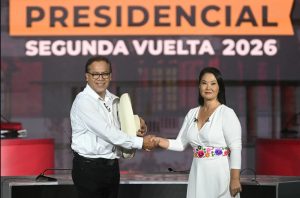
Presidential ballots in Peru have their own distinctive features that often puzzle foreigners. Rather than placing a tick or filling in a circle, as is customary in many countries, voters must draw a cross inside the square beside their chosen candidate. In Peruvian electoral law, this mark is called cruz o aspa.
Notably, one of the first to congratulate Fujimori on her victory was Belarusian leader Alexander Lukashenko. Many observers read into this gesture a hint at the prospects of Nikolai Lukashenko eventually leading Belarus.
Dynastic Restoration — that is how one might describe Keiko Fujimori’s success in what was a genuinely gripping campaign. Peru has long been mired in a state of deep political chaos, born of the perpetual struggle between presidents and Congress, impeachments and coup attempts, corruption scandals and resignations. Over the past ten years, the country has gone through nine presidents.
The electoral campaign became the convergence and crystallisation of several electoral cleavages: political establishment versus anti-establishment, coast versus Andes, the capital Lima versus the provinces, security versus social justice, the legacy of Alberto Fujimori versus the legacy of Pedro Castillo.
It is against this backdrop that the political star of Keiko Fujimori rises — the daughter of Peruvian dictator Alberto Fujimori, who in the 1990s served as the country’s First Lady at the age of nineteen in place of her mother. At that time, the electoral campaign of engineer and university rector Fujimori was built on the image of an ordinary person unconnected to the political class. Society’s demand had shifted from the theme of democratic freedom toward public security and the restoration of order. Ultimately, the country paid the price in authoritarianism and repression.
Now, once again in 2026, the country has been overwhelmed by a new security challenge — pervasive criminality. It was precisely this issue on which Fujimori concentrated her campaign. Twenty-seven percent of the country’s population has been the victim of at least one crime — theft, robbery, fraud, extortion, and so on. Gangs have been attacking schools, small businesses, and transport workers, killing those who refuse to pay protection money. Between 2019 and 2024, the homicide rate increased by 200%. It was therefore on the theme of organised crime that Fujimori and the other candidates placed their bets.
Keiko’s primary electoral problem was her negative approval rating — and not even her own, but that of her father. There is little point in recounting Alberto Fujimori’s policies in full, but in the memory of Peruvians he will remain as a symbol of order, the saviour who rescued the country from economic collapse and the terror of the Shining Path — notwithstanding his use of death squads, a fraudulent female sterilisation programme, corruption, and mass killings. He would subsequently spend approximately sixteen years in prison for his crimes.
A separate note must be made regarding the spatial polarisation of Peru, for the contrast between the urbanised coast (Costa) with its urban middle class, private-sector workers, and the residents of the capital Lima — home to 35% of the country’s population — and the rural regions of the Andes and Amazonia with their local communities, peasant organisations, trade unions, and indigenous peoples is extraordinarily pronounced at every election.
The Peruvian voter is strongly attached to their territory of residence, social milieu, and local identity. Consequently, the political-geographical factor is one of the key predictors of electoral outcomes.
The key to Fujimori’s victory lay in combining traditional coastal support, a decisive advantage in Lima, and the diaspora vote (over one million voters, incidentally). Roberto Sánchez dominated a significant portion of the rural Andean belt.
Approximately 63% of voters abroad supported Fujimori, and without the diaspora vote she would have lost the runoff. Notably, Fujimori did not carry polling stations within Peru itself. Sánchez even demanded the annulment of overseas results, citing alleged irregularities in the transportation of voting protocols, and organised demonstrations — all to no avail.
From the standpoint of political technology, Sánchez had no option but to deploy the centre-periphery cleavage model. The mountain departments (the south of the country) delivered more votes for Sánchez, since in them people frequently vote not so much in favour of the left as against the capital Lima, the prevailing political order, and the establishment. He also made use of the ex-president effect — that of the rural schoolteacher and trade union leader Pedro Castillo, the first leader of the country to come from a poor village. Castillo was removed from office by Congress and subsequently arrested for an attempted coup in 2022.
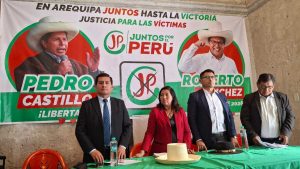
Sánchez effectively built his campaign as a continuation of the charismatic Castillo’s legacy. He regularly visited the same rural Andean regions where Castillo had enjoyed the highest support, for among the rural population Castillo remained a symbol of “one of their own,” and his removal was perceived as the machinations and intrigues of the metropolitan elites. He also made use of Castillo’s widely recognised symbols — the traditional Chota hat. Furthermore, in the southern regions of the country, memory of Alberto Fujimori’s government is considerably more negative than on the coast, meaning that the “Fujimori” brand mobilised a significant portion of voters against her even decades later.

It should be noted separately that Fujimori won over a portion of poor urban districts in coastal cities, and some sparsely populated rural territories in the east, due to the perceived threat of criminality. This group also secured her minimal advantage in the runoff. Previously, these voters had predominantly supported left-wing candidates. A segment of voters retain a clear memory of her father as someone who actually paid attention to them through improving living conditions, combating gangs, and overcoming hyperinflation. They were indifferent to the political reprisals and killings that concerned those in the capital.
It is worth noting that the campaign branding of Keiko Fujimori was developed with great professionalism and effectively constitutes a model of agitational minimalism combined with simple graphic elements in service of a coherent political brand: an orange circle, a black square, and white lettering (evoking conservative principles of authority and discipline, correlating with the national flag, and constituting an almost ideal colour palette for political advertising); a large capital letter K alongside the name Keiko (personalisation by first name rather than surname, which recedes into the background); and the slogan “Presidenta 2026.” Note that there is not a single superfluous element — a person remembers a symbol, not text. The visual identity was designed to soften the psychological barrier and stereotyped perception of the image of a dictator’s daughter who carries the shadow of hard-line fujimorismo.

The theme of well-chosen archetypes is itself highly productive in any campaign. The runoff in Peru was a war between two archetypal models of Peru: the need for order versus the need for justice, in brief. Keiko Fujimori combined three archetypes: the “ruler” (emphasis on a strong state), the “defender” (combating criminality), and the “heir” (appeal to her father’s policies). Roberto Sánchez embodied more of the archetype of the “caregiver” (social support, state inclusivity), the “ordinary person” (fusion with the image of Castillo), and the “reformer” (the proposal to adopt a new Constitution by referendum).
When people are troubled by criminality, political chaos, and economic instability, the pendulum of collective consciousness invariably swings toward the archetypes embodied in the image of Keiko Fujimori. Incidentally, approximately one third of Peruvians live on less than 8.5 US dollars per day.
Young voters (aged 18 to 29) — comprising approximately 25% of the total electorate — played a very particular role in the 2026 presidential election. Young people inhabit anti-systemic preferences, and thus a significant portion of Peruvian youth voted for candidates outside the traditional mainstream — outsiders, bloggers, or new political movements. Consequently, ahead of the runoff they faced the familiar dilemma of choosing the lesser of two evils. Many young voters deliberately spoiled their ballots or left them blank.
In the first round, mention should also be made of far-right anti-communist Rafael Aliaga and Jorge Nieto, who finished third and fourth respectively. Former footballer and former mayor George Forsyth also ran.
Aliaga is, incidentally, a rather eccentric candidate, having proposed transporting criminals to the tropical forests of Amazonia and surrounding them with bushmaster vipers. Had far-right Aliaga advanced to the runoff, the entire campaign strategy of conservative Fujimori would have required drastic revision. It was therefore before the first round that Fujimori launched a fierce information war against Aliaga. A targeted campaign to discredit Aliaga’s governance record as Mayor of Lima was launched through independent media, international outlets, opposition politicians, and investigative journalism. He ultimately failed to advance to the runoff. In the end, he endorsed Fujimori in the second round, which led to a significant electoral transfer that reinforced her advantage.
These elections conclusively demonstrated that traditional television has lost its monopoly on influence. In her campaign work, Fujimori placed emphasis on a disciplined and structured party network, dancing on stage at rallies, and a strong digital component (engagement reach on TikTok amounted to 1.4 million, on Facebook — 2.1 million). Her target constituency was urban residents, the middle class, entrepreneurs, and older voters.
Particular attention should be drawn to the fact that, starting with a negative approval rating of 60% at the outset of the campaign, her team was able to algorithmically neutralise that toxic image via TikTok by applying a strategy of micro-segmentation (live streams with popular Peruvian bloggers, breakdowns of memes about herself, participation in trending flash mobs). This did not substantially help attract young people, but it partially diluted the toxic image of the “perennial contender” and reduced youth mobilisation in favour of her opponent.
Sánchez lagged behind in social media work — digital advertising asymmetry was effectively in Fujimori’s favour. He focused on the tried and tested methodology of door-to-door canvassing (meetings at markets, outside municipal offices, at farmers’ cooperatives, and trade union rallies). His central image was built as “the president of the periphery.”
Candidate Jorge Nieto held his first-round campaign closing event as a virtual rally streamed in the Roblox gaming space, explicitly targeting young people. Although the event did not yield a significant boost, it generated viral resonance, presenting the candidate as a modern, technologically savvy figure.
A separate note must be made regarding deepfakes and disinformation campaigns. There was mass distribution across Andean regions of AI-synthesised audio recordings in which voices resembling members of Sánchez’s campaign team supposedly discussed funding from illegal mining operations. All of this was disseminated through closed WhatsApp groups in rural areas.

Additionally, social media (primarily WhatsApp and TikTok) circulated claims that Keiko Fujimori’s election was a premeditated conspiracy by the Japanese government to seize control of Peru’s natural resources and establish Japanese dominance — and that Keiko herself was Japanese. The basis for this was Keiko’s ethnic background, as both her paternal and maternal grandparents were Japanese immigrants. One of the most prominent examples of this campaign was a widely circulated fabrication of an alleged “Japanese passport” belonging to Keiko Fujimori, which Peruvian fact-checkers swiftly debunked.
Notably, Fujimori played the vote of persons with disabilities with considerable skill. As her vice-presidential candidate she nominated Luis Galarreta, who was born without arms because his mother had taken thalidomide during pregnancy. He has been elected to Congress three times and even served as President of Congress in 2017–2018.
One way or another, the 2026 Peruvian presidential election demonstrated not only the effectiveness of new and old electoral practices, but also the continuing rightward shift of Latin America. The right-wing renaissance is an established macro-regional political trend. Next in line — Brazil.