Facebook
 Telegram
 Instagram
 posternak.oleg@gmail.com
  Facebook
 Telegram
 Instagram
 posternak.oleg@gmail.com
 The Electoral Road to a “Just Kazakhstan”: The Parliamentary Campaign in an Eastern Autocracy
Kazakhstan is now electing a reformed parliament, the Kurultai. It has only 145 seats and is now a unicameral body.
Given that the country’s political system represents a distinct form of Eastern autocracy, only seven pro-government political forces are taking part in the elections, which are being held under a proportional representation system with a 5% electoral threshold.
The opposition was barred from participating. Single-member constituencies were abolished. Self-nomination was also scrapped, effectively blocking even individual opposition candidates from finding their way into parliament. Criminal cases have also been brought against a dozen independent journalists and bloggers, including Ahmedyarov.
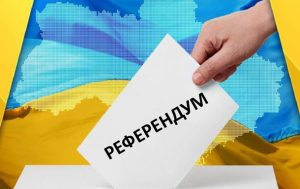
Tokayev needed to consolidate the new political order following the constitutional reform. On July 1, Kazakhstan’s new Constitution, previously approved in a referendum, came into force.
In general, the parliamentary election has become an example of a carefully managed electoral machine operating without overtly repressive effects. The main objective was to shift the focus of voters away from choosing between parties and toward choosing a specific direction for implementing Tokayev’s political course.
Within this paradigm, voters are motivated by the sense that they are participating in the country’s historic transition, but without posing a threat to the system. In other words, the choice is not about a particular politician or political faction; it is about choosing a path of transformation. As a voter, you become part of a historic decision, rising above political infighting and short-term political expediency.
Most of the seats are expected to go to the main pro-government force, Ädilet (Adilet, or “Justice”). The party has capitalized on the image of a statist party serving as the political vehicle for Tokayev’s course. The new party of power emerged as a rebranded version of the old Amanat. Tokayev succeeded in refreshing the overall party interface by bringing in “new faces.” But, more importantly, this maneuver allowed the authorities to shed accumulated negative ratings.
What is particularly interesting is that the party was not built as a conventional party of power resting on bureaucratic foundations, but rather as Tokayev’s new technocratic guard, tasked with implementing the new political order.
Its field strategy was based on segmenting the electorate according to professional groups — metallurgical workers, public-sector employees, oil workers, and others — which made it possible to use administrative resources effectively.
All six other parties were selected for the ballot according to model electoral clusters:
– Auyl — for rural communities and agricultural workers;
– Respublica — for entrepreneurs, the IT sector, and the creative urban class;
– Ak Zhol — for liberals, small business owners, and the intelligentsia;
– People’s Party of Kazakhstan — for left-wing voters and pensioners;
– National Social Democratic Party — for employees and working people;
– Baytaq — built around a green environmental agenda and targeting urban youth.
Despite Kazakhstan’s technological leap forward, the Kurultai elections did not demonstrate an overwhelming dominance of digital communication strategies. Most candidates and party activists relied on traditional meetings, interviews, and media appearances.
It is also worth noting that Kazakhstan imposes fairly strict regulations on the use of online platforms for campaigning. This is particularly striking given that 2026 has been declared the Year of Digitalization and Artificial Intelligence in Kazakhstan.
The new Digital Code of 2026 introduced mandatory labeling of content related to artificial intelligence. Campaign materials on TikTok, Instagram, Telegram, and Threads may be published only on the basis of a written agreement with a political party and must carry a “campaign material” label.
The People’s Party, for example, made extensive use of targeting based on databases of municipal debtors, offering them debt amnesties.
One feature that deserves particular attention is the ban on publishing exit-poll results before midnight. I believe this innovation could become a post-election trend not only in Asia.
The televised debates on 24KZ were extremely dull — essentially a fictitious demonstration of electoral competitiveness, with representatives of all seven parties appearing on the same stage. Yet the authorities demonstrated a considerably higher level of sophistication in managing political communications.
There appears to be a choice, but only one that does not threaten Tokayev. Let politicians argue about the disappearance of 1,200 villages, as long as they do not touch the foundations of the regime.
Viewers could use a QR code during the live broadcast to determine who had won the debate, which in itself exerted a direct framing effect on the audience.
The opposition-minded segment of Kazakh society has created the “11M” civic movement with the aim of consolidating the non-party segment of society. The authorities, however, have been responding rather quickly to manifestations of protest.