Facebook
 Telegram
 Instagram
 posternak.oleg@gmail.com
  Facebook
 Telegram
 Instagram
 posternak.oleg@gmail.com
 The Czech “Trump,” the rise of the “motorists,” and the collapse of the leftists. The Czech Republic has elected its parliament!
The Czech Republic has voted. The election results need to be clarified not only in terms of benefits for Ukraine, but also in terms of electoral engineering.
First, it should be noted that the parliamentary elections had a record turnout of 68.95%, which is comparable to the level of electoral campaigns in the late 1990s. The winning party, Andrej Babiš’s Action of Dissatisfied Citizens 2011 (ANO), managed to mobilize the maximum number of its voters.
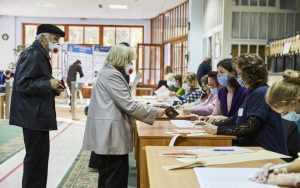
Also, for the first time in Czech elections, citizens who were abroad or living abroad had the opportunity to vote by mail. Ukraine could adopt this experience, as the large Ukrainian diaspora could actively participate in post-war voting, as in Moldova and Romania.
ANO’s victory is not the result of Russian influence or political technology. It is a continuation of the rightward shift in Europe and a correct acceptance of the social interests of ordinary Czechs.
The focus of ANO’s campaign was that the government was redistributing funds to foreign affairs (green policy, climate, migrants, Ukraine) at the expense of the domestic interests of ordinary Czechs. In other words, the task was to present the current government of Petr Fiala (SPOLU coalition) as an external agent in the interests of Brussels. The party positioned itself around high energy prices, tax cuts, and raising teachers’ salaries to 75,000 crowns by 2029.
The last TV debate was particularly successful for Babiš, where he behaved tactically, moderately, and cautiously. Everyone was expecting shock tactics and emotions, but what they got was a balanced politician. This was a fairly clever move aimed at not alienating the voters Babiš planned to attract to his side, as well as preventing the mobilization of voters from his competitors in SPOLU.
This was enough to take votes away from rival opposition forces at the end of the campaign and show ANO as the main opposition, a balanced, capable force, a “big player” capable of satisfying the broad demands of voters.
The failure of the ruling SPOLU coalition is due to voters’ economic dissatisfaction and social stress from inflation, in particular high prices for energy, food, and household expenses. In addition, the rating was affected by a bitcoin scandal in the government when it emerged that the Ministry of Justice had received a large donation of $45 million in bitcoins from a convicted cybercriminal.
The problem is that Fiala focused on intimidating the Czech electorate with Babiš as a “Russian agent.” He hoped that voters would feel that SPOLU was a safe and reliable choice against the backdrop of “pro-Russian” parties. What the ruling authorities in Moldova managed to achieve did not work in the Czech Republic. Mobilization against the Russian “fifth column” through gross simplification did not work.
The more extreme right-wing, anti-immigrant, and Eurosceptic SPD Tomio Okamura also failed. This political force supports a referendum on the Czech Republic’s withdrawal from the EU and opposes aid to Ukraine and Ukrainian refugees. This party built its election campaign on blaming Ukrainians for all domestic problems and appealed to a nationalist-minded protest electorate. For SPD voters, the main issue was migration. The party expected to win 12-15% of the vote, but ultimately had to settle for 7.8%. In the final stage of the campaign, some voters switched to ANO.
The positive news from the election is that the left-wing populist project Stačilo! (Enough!) was defeated. It united several left-wing political forces led by MEP and head of the Communist Party of Bohemia and Moravia Kateřina Konopná. This movement adheres to an openly pro-Russian line. Konecná, for example, advocates for the Czech Republic’s withdrawal from the EU and NATO and blames the West for the war in Ukraine, accusing it of provoking Russia. The movement received only 4.3% of the vote.
The high chances of the SPD and Stačilo at the start of the campaign were the result of the ruling parties’ campaign about the Kremlin threat. Okamura and Konecná only benefited from the fact that the main government bloc had already “attributed” influence and recognition to them through active criticism of their pro-Russian stance. And in some enclaves, they began to grow.
And then, at the end of the campaign, they “deflated.” Stačilo!’s failure to pass was due to the fact that its voters were intercepted by ANO as a larger and more recognizable brand, especially in many poorer border areas, where the party intensified its anti-elitist and everyday social protest messages in the final stage of the campaign.
Some voters of small or new movements (especially if there are doubts about their chances of success) prefer a larger player that “has a chance of winning” — in 2025, that is ANO. Voters decided that left-wing populists and communists should not return to the Chamber of Deputies. The increase in turnout also played a negative role for the leftists.
The biggest surprise of the campaign was the success of the Motorists for Themselves party, which won 6.8% of the vote. The party won in areas where voters are more dependent on motor transport.
The niche party attracted the attention of a certain group of voters—drivers who are frustrated by fuel prices, road problems, and green policies.
Incidentally, the party used several innovative tricks during the campaign, such as virtual reality glasses. Wearing them, voters could touch party leader Filip Turek, who talks in detail in his garage about the engine of one of his cars.
The party’s result could have been much better if it weren’t for a series of cases involving Turek – from speeding to allegations of illegal construction and rape.
It is difficult to predict the coalition picture at this point, as there are two major factors influencing this process. The first factor is the position of President Petr Pavel, which could completely change the coalition balance. According to the Czech Constitution, it is the president who appoints the prime minister, and within 30 days, the government asks the lower house for a vote of confidence.
The second factor is that, before the vote, it became known that the criminal case regarding the illegal receipt of European subsidies by Babiš’s company Agrofert had been reopened, which makes it possible for European law enforcement agencies to request the politician’s extradition. Therefore, there is a view that Babiš will not be able to become prime minister due to an unresolved conflict of interest, but he may retain significant influence over another candidate from ANO.
Nevertheless, it should be understood that Babiš is not Orbán. Comparing them is simplistic and not entirely accurate. Yes, they base their positioning on criticism of Brussels and EU bureaucracy, are highly skeptical of migration, and target older middle-aged voters.
But Babiš is a billionaire entrepreneur, and his party is more of a political project than an ideological force like Orbán’s Fidesz. Andrej Babiš ranks seventh among the richest people in the Czech Republic. Orbán is openly pro-Russian, while Babiš is much more restrained and cautious. During his first term as prime minister (2017-2021), he supported EU sanctions against Russia, although he is not prone to harsh anti-Russian rhetoric.
Secondly, the appearance of Russian UAVs in Europe has fueled anti-Russian sentiment among Czechs, and therefore ANO and the Motorists also consider Russia to be the main threat to the Czech Republic. This means that in the context of forming a government, ANO will have to adjust its actual foreign policy program compared to its pre-election rhetoric.
Thirdly, there are many influential pro-European and pro-Ukrainian politicians in this party. ANO is right-wing, but still moderate. For example, Karel Havlíček (deputy chairman of the ANO party) met with the Ukrainian ambassador in January 2025 and said that “Ukraine can continue to count on the support of the ANO movement.”