Facebook
 Telegram
 Instagram
 posternak.oleg@gmail.com
  Facebook
 Telegram
 Instagram
 posternak.oleg@gmail.com
 Estonian Democracy Between Ukrainian and Russian Influence
Today, Estonia concludes its parliamentary elections for the Riigikogu, electing 101 members.
The election operates under a proportional system with 12 multi-member constituencies and a 5% electoral threshold. Each district is allocated a certain number of seats in the Riigikogu.
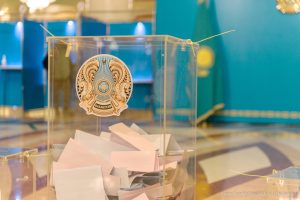
A distinctive feature of Estonia’s elections is the flexibility and variety of voting methods—early voting, electronic voting, and in-person voting.
Estonian voters can cast their ballots at any polling station. A significant share of votes has already been cast electronically before today’s in-person voting day.
Notably, if a voter has used both electronic and paper ballot voting, only the paper ballot vote will be counted.
One of the key electoral dividing lines has been the war in Ukraine. It is worth getting used to the fact that most election campaigns in key countries for Ukraine will revolve around this war.
According to polls, the Reform Party, led by incumbent Prime Minister Kaja Kallas, is in the lead. The party advocates a tough stance against the Kremlin and increased support for Ukraine, with a pre-election approval rating of 29%. However, winning the election is not enough—forming a coalition is crucial.
The right-wing opposition, the Conservative People’s Party of Estonia (EKRE), focuses on domestic issues, particularly inflation (which, at 24%, is the highest in the EU). This approach has helped the party boost its ratings by promising lower electricity prices.
EKRE has also engaged in political manipulation during the campaign. The party’s founder, Mart Helme, spread claims that Ukrainian women could be spreading HIV in Estonia through prostitution. His son, the party leader, opposes supplying weapons to Ukraine, arguing that it weakens Estonia’s own defense capabilities.
Before the election, EKRE’s rating hovered around 20%, fluctuating between increases and declines. A major scandal involving the party’s alleged ties to Yevgeny Prigozhin hurt its standing. In mid-February, Politico published an article stating that Prigozhin had planned to support EKRE ahead of the 2019 European Parliament elections. Following this revelation, EKRE’s ratings plummeted.
Interestingly, EKRE had long employed a strong anti-Russian rhetoric, fueling fears of a Russian invasion. Initially, this helped the party distance itself from pro-Russian associations. However, as evidence suggests, such political forces are often of greater interest to the Kremlin, as they provide a more effective avenue for hybrid influence.
The Russian-speaking population and non-ethnic Estonians have traditionally supported the Centre Party, which holds a rating of 16-19%. The Centre Party was part of Kallas’s coalition until June 2022 but withdrew after refusing to support her initiative to transition primary education entirely to Estonian.
The Centre Party, notably, has condemned Russia’s war. This unexpected stance is likely driven by the views of its electorate. The party’s leader and parliamentary speaker, Jüri Ratas, visited Ukraine and received the Order of Prince Yaroslav the Wise from President Zelenskyy. However, some of the party’s most pro-Russian members, who were expelled and are now running as independents, could erode its support in its traditional strongholds.
Support has surged for the new liberal project Eesti 200, which actively promotes the idea of a unified school system and has a chance to enter parliament for the first time. The party’s overall rating fluctuates between 9-15%.
Other parties that may surpass the electoral threshold include the conservative party Isamaa (“Fatherland”), with a rating of 7-9%, and the Social Democratic Party (7-11%). Both smaller parties are currently in a coalition with the Reform Party. There are some internal tensions within Isamaa, as one faction leans toward forming a coalition with EKRE.
Pro-Russian parties include the conservative movement Koos (“Together”) and the United Left Party, which garner up to 10% support in Russian-speaking enclaves. However, at the national level, they do not yet meet the electoral threshold.
Thus, several coalition scenarios are possible:
- Reform Party + Eesti 200 + Social Democrats.
- Reform Party + Isamaa + Social Democrats.
- Reform Party + Centre Party + one of the smaller parties.
- EKRE + Centre Party + Isamaa.