Facebook
 Telegram
 Instagram
 posternak.oleg@gmail.com
  Facebook
 Telegram
 Instagram
 posternak.oleg@gmail.com
 Six Reasons Why a Baltic War Could Benefit Russia
With each stage of the war in Ukraine, the probability of a Baltic campaign increases. A broader, systemic conflict is no longer a distant abstraction—it is approaching the threshold of reality.
Why might such a war become advantageous for Russia?
1. Deepening the fracture within NATO’s transatlantic unity.
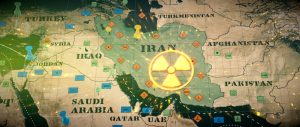
Moscow may рассчитывать on a scenario in which the United States refrains from providing full-scale support to its European allies, particularly in response to their lack of backing for an Iranian campaign. On the eve of U.S. midterm elections, Donald Trump would likely be reluctant to entangle himself in European security affairs amid the fallout of an Iranian political crisis.
2. Triggering an internal crisis of the collective security model.
A Baltic escalation would directly test Article 5 of the Washington Treaty. European allies may struggle to respond swiftly and cohesively, risking failure in the crucial dimension of reaction speed. Any delay in allied response constitutes a key tactical advantage for Russia in the initial phase of conflict.
3. Constructing a narrative of “protection” and achieving symbolic revenge.
The Kremlin could frame intervention as assistance to Russian-speaking populations, while simultaneously inflicting a symbolic defeat on the Baltic states as historical retribution for the collapse of the Soviet Union. This would serve to boost domestic morale and compensate for the absence of decisive victories in Ukraine. To preempt dissent and prepare for potential full-scale mobilization, instruments of independent communication—such as Telegram—could be restricted within Russia’s information space.
4. Leveraging horizontal escalation and strategic diversion.
Russia appears to be pursuing a strategy of horizontal expansion of the war. The re-establishment of the Moscow and Leningrad military districts in 2024, alongside legislative initiatives allowing the deployment of Russian forces abroad under expanded pretexts, signals preparatory groundwork. A prolonged Iranian conflict would likely sustain elevated global oil prices, ensuring increased revenues for Russia. Meanwhile, the Russian military—large, battle-hardened, and adapted through combat in Ukraine—has integrated advanced capabilities: fiber-optic-guided drones, machine-vision systems, modernized ballistic missiles, and sophisticated “grey zone” operations. These tools could be tested against relatively less-prepared NATO peripheral states.
5. Undermining Western support for Ukraine.
A protracted Iranian war could slow the export of U.S. weapons through procurement mechanisms such as PURL, while a Baltic conflict would force European states to redirect resources toward immediate alliance defense obligations. In this context, delays in the provision of a €90 billion EU financial package—already complicated by potential vetoes from Hungary and Slovakia—could result in its suspension or reallocation to urgent European defense needs, to the detriment of Ukraine.
6. Converting military gains into geopolitical bargaining.
A successful Kremlin military operation in the Baltic region could later be transformed into a negotiation track with NATO. Moscow might propose a settlement involving spheres of influence and revised security arrangements: for example, the return of occupied Baltic territories (such as Narva in Estonia) in exchange for Western concessions. These could include pressure on Ukraine to withdraw from Donbas and the de facto recognition of Russian control over both Donbas and Crimea.
However, Russia’s potential for escalation is not without constraints.
China’s position remains the primary limiting factor. Beijing is not interested in a collapse of trade relations with the European Union, although a NATO-focused conflict could simultaneously create strategic opportunities for China, particularly regarding Taiwan.
Belarus constitutes a second variable. Alyaksandr Lukashenka has historically exercised caution in providing direct, operational support to Vladimir Putin. Moreover, Washington has recently explored the groundwork for a more distinct bilateral engagement with Minsk. Yet, the growing integration of Belarusian security structures with Russia, alongside the deployment of advanced missile systems such as the “Oreshnik” and tactical nuclear weapons, increasingly binds Belarus to Moscow’s strategic orbit.