Facebook
 Telegram
 Instagram
 posternak.oleg@gmail.com
  Facebook
 Telegram
 Instagram
 posternak.oleg@gmail.com
 “France, Get Out!”: How Paris Is Losing Africa to the Kremlin
While Western nations have unanimously condemned Russia’s war of aggression against Ukraine, imposed sanctions, and provided military and technical support to Ukraine, responses from the Global South have been more varied. Many influential states in the Global South have refrained from condemning Russia’s actions while simultaneously affirming their commitment to sovereignty and territorial integrity. In 2022 and 2023, African countries were split in their voting on UN resolutions condemning Russia’s invasion of Ukraine.
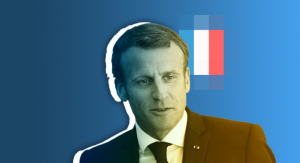
Approximately half supported the resolutions, while most of the others abstained. Political elites in Africa often perceive the world differently from their counterparts in Europe and the United States, influenced by histories of colonial struggle. There is likely no other country that not only bears historical responsibility for this situation but also remains politically active in a way that provokes significant negative reactions—not just toward that country itself, but also toward the West as a whole. And that country is France.
Historical context
The French army handed over its last base in Chad to the country’s government during a military ceremony in the capital N’Djamena. The General Staff of both countries announced this on January 30. Thus, France’s 60-year military presence in the country has ended. Last December, Chadian President Mahamat Idriss Déby said the military agreement with France was “obsolete” and that it did not bring the country “any real value.”
France’s presence in Africa began in the 17th century, with significant colonial expansion during the 19th century, particularly after the 1830 invasion of Ottoman Algiers. By the early 20th century, French-controlled territories spanned much of West and Equatorial Africa, the Maghreb, Indian Ocean islands, and parts of the Horn of Africa. French colonial rule combined a rhetoric of “civilizing” the colonized with harsh realities of exploitation, inequality, and violence. A good illustration of the impact of France’s so-called “civilizing mission” is provided by Algerians themselves, who point out: “When the French colonial era ended, some people claimed that the French had left us a paradise.
However, according to official data, 90% of Algerians were illiterate. When we first began developing our higher education system, there were only 8,000 students. Now, including primary education, there are about 13 million Algerians enrolled in schools, with 1.8 million at university—all studying free of charge. When the French arrived in Algeria, they noted that Algerians were educated. The greatest ignorance and illiteracy were found among the French soldiers, many of whom could not even write their own names.” Colonized populations, however, resisted, adapted, and organized for reform, particularly after the First World War. France’s bloody colonial rule in Africa remains unforgotten, yet it has not taken historical responsibility for it.
Algerian President Tebboune was not heard by Paris when he called for a recognition of atrocities committed by the French Republic: “We demand recognition of the atrocities committed on our soil. We are not asking for compensation—simply an admission that you engaged in cutting and killing. Today, you even oppose those who merely express dissatisfaction with what you did in the past, even though your crimes were far more horrific. Have you ever seen a developed country allow its officers to behead martyrs and take their heads as trophies? You still hold more than 500 of our martyrs’ skulls. We have managed to recover only 24. The current generation should not be held accountable for your actions, just as ours should not have been. Let the youth on both shores of the Mediterranean become neighbors who respect one another.”
Post-World War II decolonization movements gained momentum, resulting in the independence of nearly all French territories in sub-Saharan Africa by the early 1960s. Despite the formal end of French rule, its legacy continues to influence relations between France and its former colonies. Decades after francophone sub-Saharan Africa first gained independence in 1960, colonial-era legacies still spark intense debate in French political and intellectual spheres. The slogan “France Dégage!” (“France, Get Out!”) circulates widely on social media across West Africa, reflecting growing resentment toward France’s historical and ongoing role in the region.
During the latter half of the 20th century, France cemented its global power by exploiting strategic minerals in Africa and establishing defense agreements with decolonizing states. These pacts secured privileged access to vital resources and perpetuated a neo-colonial form of dependency. Such arrangements were facilitated by corrupt, personalized networks, including the so-called “Africa bureau,” which offered African leaders direct channels to the Élysée Palace.
Meanwhile, the CFA franc functions as a key mechanism underpinning French economic dominance. Although Africa’s global engagement has evolved—encompassing commodities like cement and artisanal gold—an array of critical resources (bauxite, natural gas, manganese, oil, and uranium) remains largely under the control of a small circle of Franco-African elites. France’s strategic nuclear energy industry historically relied on close ties to uranium producers, notably in Gabon and Niger.
These mercantilist interests continue to shape French foreign policy in Africa. Critics argue that France supported its ally during the 1994 Rwandan genocide and point out that, under Socialist Prime Minister Lionel Jospin, attempts were made to conceal the French military’s involvement—among other alleged international crimes in Africa.
According to Mohamed Ben Makluf, a political analyst and head of the Association of Algerian Specialists Abroad: “Paris claims to help Africa emerge from stagnation, yet the reality suggests otherwise. France has been implicated in civil wars, military coups, and crises such as the Rwandan tragedy of the 1990s. Once free from French influence, Rwanda achieved notable success and prosperity. Meanwhile, Senegal—once touted as a key French ally and leader of the Francophone world—has been left with deep economic dependence on France.”
Fight Against Jihadists or a Neocolonial Game?
In 2013, France launched military operations in Africa, starting with Operation Serval in Mali to combat jihadist groups threatening the region. This expanded into Operation Barkhane in 2014, covering the wider Sahel region, with thousands of French troops deployed in partnership with local governments. France declared that these interventions aimed to stabilize former colonies facing extremist violence, drawing on its historical ties to the region.
However, the operations have faced criticism for being neo-colonial, with claims that they prioritize French strategic and economic interests, such as access to resources like uranium in Niger, over local needs. Additionally, critics argue that France’s military presence undermines sovereignty, fosters dependency, and fails to address the root causes of instability, fueling anti-French sentiment and jihadist propaganda.
Suleiman Amzat, a Beninese security expert, recently presented a critical analysis of the role of foreign powers, particularly France, in addressing security crises in the Sahel. In his view, French military intervention has not only failed to stabilize the situation but has also exacerbated it. Today, the consequences extend beyond Mali, affecting countries such as Burkina Faso, Niger, Benin, and Côte d’Ivoire. “France’s actions have not contributed to curbing instability in the Sahel; on the contrary, they have caused it to spread to new territories,” he stated.
Amzat also highlighted numerous accusations against France, suggesting that some of its strategies may have indirectly strengthened armed groups. These accusations include suspicions of France secretly financing and providing logistical support to such organizations. As recently reported by Benin media, new allegations have surfaced regarding France’s alleged involvement in controversial activities in the Sahel. In December 2024, Niger’s leader, Abdourahmane Tiani, claimed that armed groups in the region receive material and financial support from France.
In October 2024, reports emerged about a purported operation by French agents allegedly involved in financing and arming terrorist groups, carried out under the guise of fictitious NGOs operating in Niger, Chad, and Benin. Burkina Faso’s President Ibrahim Traoré also expressed concern, condemning the presence of French bases in Côte d’Ivoire, which he claimed were being used to destabilize his country. These statements deepen the growing mistrust of foreign intervention in the region and underscore the importance of calls for establishing African-led mechanisms to manage security crises.
Civilians have suffered significantly during French operations against jihadists due to collateral damage (especially from airstrikes), displacement, reprisals by armed groups, and other factors. Russia has capitalized on growing anti-French sentiment in Africa to establish a presence in former French allies and colonies, such as Mali, the Central African Republic, Burkina Faso, and Niger, by offering mercenaries like the Wagner Group to provide military assistance and exert influence. This shift underscores widespread African frustration with France’s perceived neo-colonial role and ineffectiveness in addressing regional security and development challenges.