Facebook
 Telegram
 Instagram
 posternak.oleg@gmail.com
  Facebook
 Telegram
 Instagram
 posternak.oleg@gmail.com
 The Iran War: the geometry of international disorder
The current Iran war stands at the crossroads between a limited war—understood in the classical sense described by Henry Kissinger—and a modern continental conflict with economic, geostrategic, and civilizational implications for the entire global security system.
At this stage of the war, the United States and Israel are undergoing a test of endurance. The Iranian regime has effectively been decapitated, its air defense system suppressed, and its navy gradually destroyed.
Indeed, the regime in Iran resembles a mythical dragon: cut off one head and another appears. Yet administrative chaos is increasingly visible. The central chain of the political structure—the main supporting pillar of Iran’s theocratic order, namely the dominant authority of the Rahbar—has been disrupted. A new Supreme Leader, even if it were the son of the slain Ali Khamenei, would require political consolidation, recognition, and unquestioned obedience under wartime conditions.
Achieving this, however, will be extremely difficult given the multiplicity of power centers: religious ayatollahs, the Islamic Revolutionary Guard Corps (IRGC), the regular army (Artesh), the president, parliament, and the judiciary. These institutions possess a partially interchangeable and compensatory nature and are collectively interested in preserving the architecture of the regime. For the Iranian elite, the war has taken on the character of corporate survival, which at the very least compels them to avoid internal fragmentation and open contradictions.
Nevertheless, an effective autocracy requires authority imposed by force. This becomes difficult under conditions of systematic destruction of military command infrastructure and the regime’s repressive apparatus. Such authority can no longer be achieved through negotiations with the United States. Unless, of course, Washington already has loyal figures it could use—by analogy, for example, with Venezuela’s vice president Delcy Rodríguez.
Let us consider a heptagonal analytical framework reflecting the positions and interests of seven key actors: the United States, Israel, Iran, Russia, China, the Arab states of the Middle East, and Ukraine. The latter is included for practical reasons, as the new Iran war could have even more serious consequences for Ukraine.
For now, Iran has not lost this war—but it is increasingly unlikely to win it. Tehran hopes that the resilience of its political system and the passage of time will gradually improve its position, while also counting on Washington’s reluctance to plunge into a prolonged conflict. Donald Trump, meanwhile, is doing everything possible to convince the public of the United States’ unconditional capacity to sustain a long campaign against Iran, not limited merely to air or naval operations. It should be noted, however, that at this stage the United States has secured a decisive advantage: Iran has been left one‑on‑one with Washington, without meaningful allied or external support. Moreover, by threatening the closure of the Strait of Hormuz, Tehran has itself motivated the United States to act more decisively and aggressively in order to end the war quickly. In this conflict, every hour is measured not in minutes but in dollars and in the price of oil and gas.
Israel appears to be the absolute beneficiary of the current situation. What had been impossible under previous U.S. administrations—even during Trump’s first term—is now unfolding as a perfect storm. The anti‑terror campaign against Hamas and Hezbollah has broken the backbone of Iran’s proxy infrastructure, while the twelve‑day Iranian war has crossed an important psychological threshold for both Israel and the United States. It has demonstrated that Iran can indeed suffer significant damage—and that its response can be constrained and managed.
For Trump, this military campaign could either turn into a painful political setback ahead of the November midterm elections in Congress or into a neo‑imperial triumph, the glow of which might help Republicans maintain control not only of the Senate. For Washington, the most convenient scenario would be the construction of a loyal and cooperative political structure composed of representatives of the existing Iranian elite.
The United States is unlikely to be interested in restoring the Pahlavi dynasty or initiating a democratic transition. Both options are lengthy, costly, risky, and likely doomed to failure—as demonstrated by Iraq and Afghanistan. A more attractive political strategy would be to identify weak points within the Iranian elite—perhaps through a split between the IRGC and the regular army—form a pro‑American faction, and ensure continuity of power while preserving the regime’s basic institutional framework.
In strategic terms, the United States openly pursues three fundamental objectives: forcing Iran to abandon uranium enrichment, limiting the range and scale of its ballistic missile program, and ending support for terrorist proxy networks. These goals fall within the sphere of security concerns and—through certain manipulative analogies—might superficially resemble the objectives Russia articulated before its invasion of Ukraine in 2022. In reality, however, Moscow used such rhetoric as a cover for genocidal, demographic, and political ambitions. Trump’s framing does not rely on such socio‑cultural narratives.
China, for its part, is demonstrating strategic caution that from the perspective of its partners increasingly appears as weakness. Since 2021, Beijing and Tehran have been bound by a comprehensive 25‑year cooperation agreement. Yet China’s behavior toward its partner Iran has been surprisingly restrained and hesitant.
Iran had effectively functioned as a “gas station” supplying sanctioned oil to China. As much as 90 percent of Iranian oil exports flowed to the Chinese market outside the dollar system. Cheap hydrocarbons provided Beijing with a strategic advantage by sustaining the competitiveness of its export‑oriented economy. Now China will most likely attempt to shift toward Russian oil in order to avoid energy turbulence.
But China’s concerns are not explained by oil arithmetic alone. Iran has served as a key transit hub within the Belt and Road Initiative—China’s main instrument of economic expansion across Eurasia. If Iran falls within the sphere of American influence, this would disrupt trade routes and strengthen U.S. leverage over India, the states of Central Asia, and the North Caucasus.
It should also be emphasized that Iran has been a component of the informal CRINK alignment (China–Russia–Iran–North Korea), more commonly described as the “axis of autocracies.” Together with North Korea, Iran represented one of the most anti‑American forces in the region. Iran and Russia have simultaneously drawn U.S. attention and resources toward Eastern Europe and the Middle East, thereby limiting American engagement in the Far East—an area that China views with particular sensitivity as its exclusive zone of strategic interest. By building a geopolitical bridge with Moscow while removing Caracas and Tehran from Beijing’s broader strategic game, Washington could approach the direct containment of China with far greater confidence.
Russia, meanwhile, once again finds itself trailing behind in this concert of great powers. A prolonged Iranian crisis could certainly increase global demand for Russian oil as a substitute for Middle Eastern supplies, thereby replenishing the federal budget that finances Moscow’s war against Ukraine and helping the Kremlin circumvent international sanctions. Yet whether this would translate into a genuine strategic advantage remains an open question.
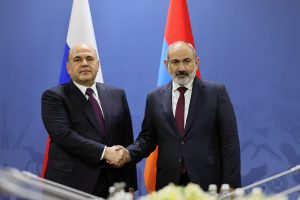
In fact, the Iran war brings three pieces of bad news for Moscow. First, Russia’s passivity in supporting its closest political and economic partners has become an entrenched tradition of unreliability and empty guarantees. Armenia as a key CSTO ally in the Caucasus, Syria as a symbol of Russian strategic success in the 2010s, Venezuela as a persistent irritant on America’s “backyard,” and finally Iran itself as a strategic partner—all have effectively been abandoned by Moscow.
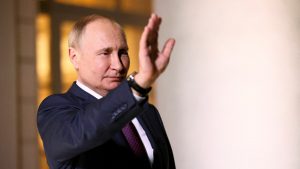
Second, Russians have now witnessed with their own eyes how the United States can conduct diplomatic negotiations with a sovereign state in Geneva one day—and the next day eliminate much of its military and political leadership with several sudden strikes. To say that Vladimir Putin was merely puzzled by this reality would be a dramatic understatement. In his perception, the implications are alarming: Russia too is engaged in negotiations with the United States, and they are also taking place in Geneva. This dynamic publicly reinforces the image of the United States as a self‑confident hegemonic power, while Russia appears as a cautious autocracy wary of provoking the dominant side.
Finally, the third negative development for Moscow is that Trump appears to have achieved significant success in building a tactical bridge with Russia against the backdrop of negotiations over the Russian‑Ukrainian war. Gradually, he has managed to limit Putin’s freedom of maneuver in pursuing other geopolitical ambitions—containing China, weakening the CRINK alignment, and draining the resources of allied regimes. The Kremlin’s hope for a favorable peace formula in Ukraine allowed Trump throughout 2025 to carefully draw Russia into a network of soft dependency that has effectively neutralized Moscow’s ability to assist its partners in moments of crisis. Today Putin cannot simply reset relations with Trump, in whom he places enormous expectations for advancing maximalist demands regarding Ukraine. Unfortunately, Ukraine has become a hostage to this American geopolitical game—although Ukraine’s own military and diplomatic skill should not be underestimated.
And what about Ukraine? Ukraine’s interest lies in the rapid dismantling of the ayatollahs’ regime and the swift conclusion of the Iran war. It should not be forgotten that Tehran bears responsibility for the blood of Ukrainian citizens—both soldiers and civilians killed by Iranian Shahed drones, as well as the victims of the IRGC’s downing of a Ukrainian Boeing passenger aircraft in 2020.
If the United States achieves its strategic objectives, cheap Iranian oil could return to global markets once sanctions are lifted, driving prices down and dealing a blow to Russia’s economic position.
However, if the war drags on, Ukraine could face a shortage of interceptor missiles for Patriot air defense systems. At the same time, Russia could increase revenues from oil and gas exports to sustain its military‑industrial complex. One must also acknowledge the erosion of the previous system of international law and the decline of traditional institutions of restraint such as the United Nations. These structures are gradually becoming part of history.
Whether Ukraine will be able to play a meaningful and sovereign role in shaping the emerging system of international relations ultimately depends on Ukraine itself.